Slovenian traditional method sparkling, fresh and balanced, orchard fruit, citrus and soft mousse, easy and reliable.
No reviews yet
Write a Review
Istenič No.1 NV
Istenič No.1 NV
RRP:
£23.55
per bottle
(You save (NaN%))
An extra dry, award winning Slovenian sparkling wine that bears the number Janez Istenič wore as the Slovenian national team goalkeeper.
The name reveals that this is the finest, the best, the first - No.1. It is a well-aged and complex wine made from a 60/30/10 blend of Chardonnay, a special local variety called Rumeni Plavec, and Pinot Noir. It is only produced in the best years, and in limited volumes.
Dry with a bit of a fruity side, this has a luscious mouthfeel, freshness and flavour on a persistent finish. Wonderful aromas of citrus and bread overlie an elegant touch of minerality with greenish yellow, persistent fine mousse.This tastes great and drinks beautifully.
''A lemon-cheesecake of a sparkling wine – voluptuous, sweet and seductive, a touch of caramel spiked with fine zested bitterness and sleepy bubbles.The kind of fizz you could serve as easily with warm gougères as a bowl of strawberries and cream.''16 pts Tamlyn Curran (JancisRobinson.com)
Food Pairing
Drink as the perfect aperitif or have it as a nimble companion with food such as creamy spinach gnocchi or tartiflette.
Quick Info
ABV:
12%
Designation:
Bizeljsko – Sremič
Bottle Size:
75cl
BIN:BTL-0534
Style:Sparkling & Champagne
Style:Sparkling Blend
More Information
Slovenia
Slovenian wine boasts a rich, ancient history. Its winemaking predates that of major wine-producing countries like France and Spain.
Today, Slovenia, situated at the crossroads of Central Europe and the Mediterranean, produces diverse and unique wines across three main wine-growing regions: Primorska, Podravje, and Posavje. Slovenia cultivates both international varieties and unique indigenous grapes
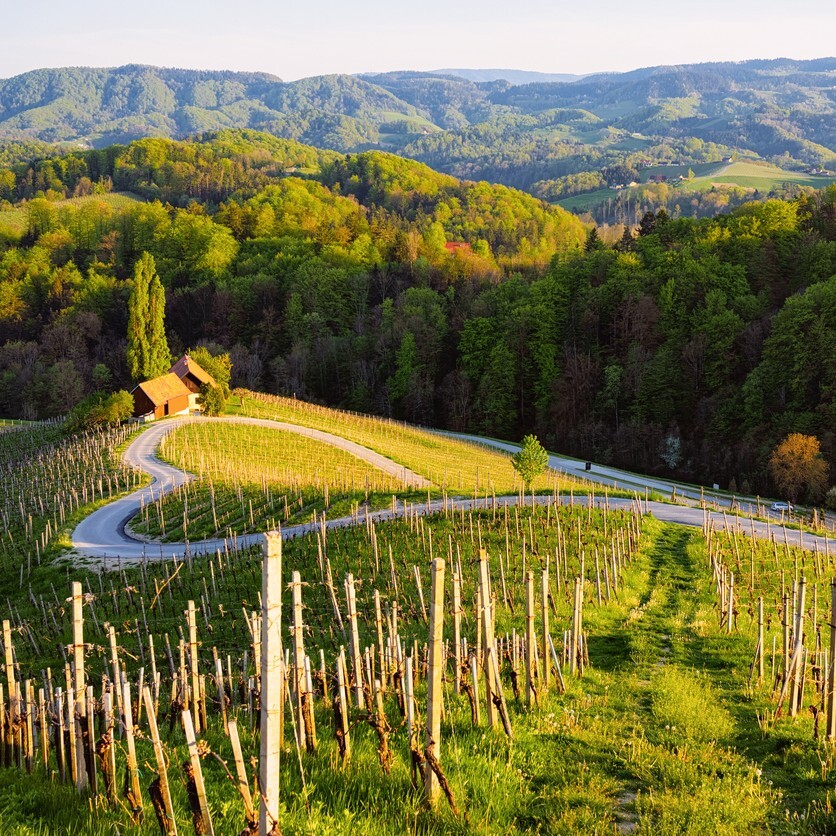
After graduating in Oenology in the 1960s Janez Istenič enjoyed a career as a winemaker at one of Yugoslavia’s state cellars. He won a scholarship to study in Champagne thanks to his love of bubbles. On his return to Slovenia he realised that his father-in-law’s vineyard had similarities with the high-acid grapes of Champagne.
The grapes, most commonly Chardonnay, Pinot noir and Pinot meunier, are used to make several base wines that are assembled together to make Champagne, English Sparkling wine and other classic cuvée wines.
Champagne blends can also include Arbane, Petit Meslier, Pinot Blanc and Pinot Gris. Other appelations have rules about which grapes can be included.