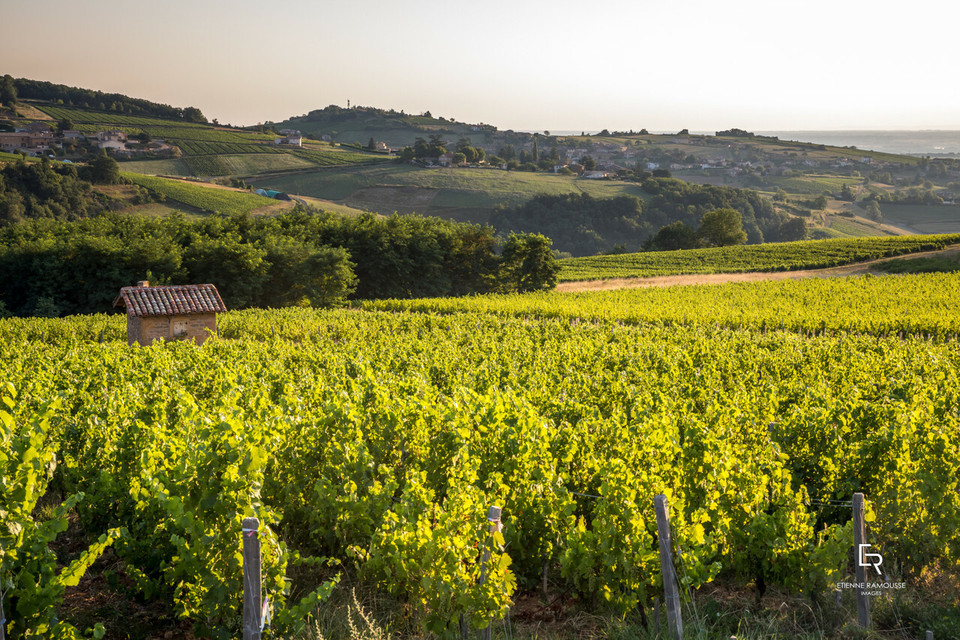
Beaujolais sits just south of Burgundy and is best known for red wines made from Gamay. The style ranges from light, bright Beaujolais and Beaujolais-Villages to more structured Cru Beaujolais from names such as Morgon, Fleurie and Moulin-à-Vent.
At its best, Beaujolais is fresh, finely balanced and quietly serious. It can be simple and joyful, or capable of real depth and ageing. If you would like a broader introduction to the region and its styles, see our guide to Beaujolais wine.
Most Beaujolais is made from Gamay, a thin-skinned grape that gives bright red fruit, freshness and modest tannin. In the south, wines labelled simply Beaujolais tend to be lighter and easy to drink. Beaujolais-Villages comes from selected communes in the northern part of the region and usually carries a little more structure.
At the top sit the ten Crus of Beaujolais, including Morgon, Fleurie, Moulin-à-Vent, Brouilly and Juliénas. These wines are defined by site rather than by the Beaujolais name on the label. Granite and schist soils in the north give more depth and shape, and the best examples will develop well over time.
Each November, Beaujolais Nouveau is released shortly after harvest. These wines are made to be enjoyed young, with plenty of fruit and lift.
While Nouveau plays an important role in the region’s identity, it represents only a small part of what Beaujolais can do. If you would like more on the history and timing of this annual release, read our post Le Beaujolais nouveau est arrivé.
Gamay Beyond the Stereotype
Gamay is often associated purely with easy-drinking reds, yet in the right sites it can produce wines of real character and longevity.
For a wider look at the grape and why it has sometimes been misunderstood, see our article on Gamay, the disloyal grape. It offers a useful history for anyone exploring Beaujolais in more depth.