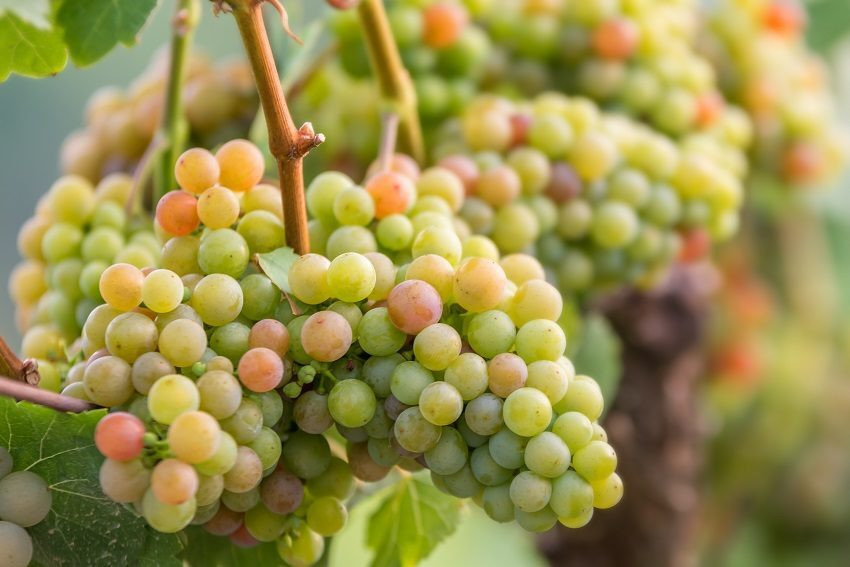
Savagnin is best known as the signature white grape of France’s Jura region. It produces distinctive wines with bright acidity, firm structure and a flavour profile that sits well outside the mainstream.
Styles vary. Some are fresh and precise with citrus and orchard fruit, while others develop deeper flavours of almond, spice and walnut through ageing in barrel. If you enjoy whites with character rather than simple fruit, Savagnin is worth exploring.
The Jura in eastern France remains Savagnin’s natural home. Here it forms the backbone of many of the region’s most recognisable wines, from fresh topped-up styles to the long-aged wines that develop the nutty, savoury character Jura is known for.
Savagnin ripens late and holds its acidity well, which helps give the wines both freshness and structure. In traditional Jura cellars the wine may spend several years ageing slowly in barrel, sometimes under a thin veil of yeast that protects the wine while allowing complex flavours to develop.
The grape is also responsible for Vin Jaune, Jura’s most famous wine, though many producers now make more approachable styles that show the grape’s citrus, apple and lightly spicy side. Plantings can also be found in Switzerland, northern Italy and parts of Australia, but the Jura remains the benchmark for the variety.
For drinkers who enjoy wines with a bit of savoury grip and a sense of place, Savagnin offers something quite different from the more familiar international white grapes.
Savagnin is also the grape behind many of the region’s traditional oxidative styles, including the wines that eventually become Vin Jaune. If you would like to understand these wines in more detail, our guide to oxidative wines from Jura explains the techniques that give them their distinctive character.